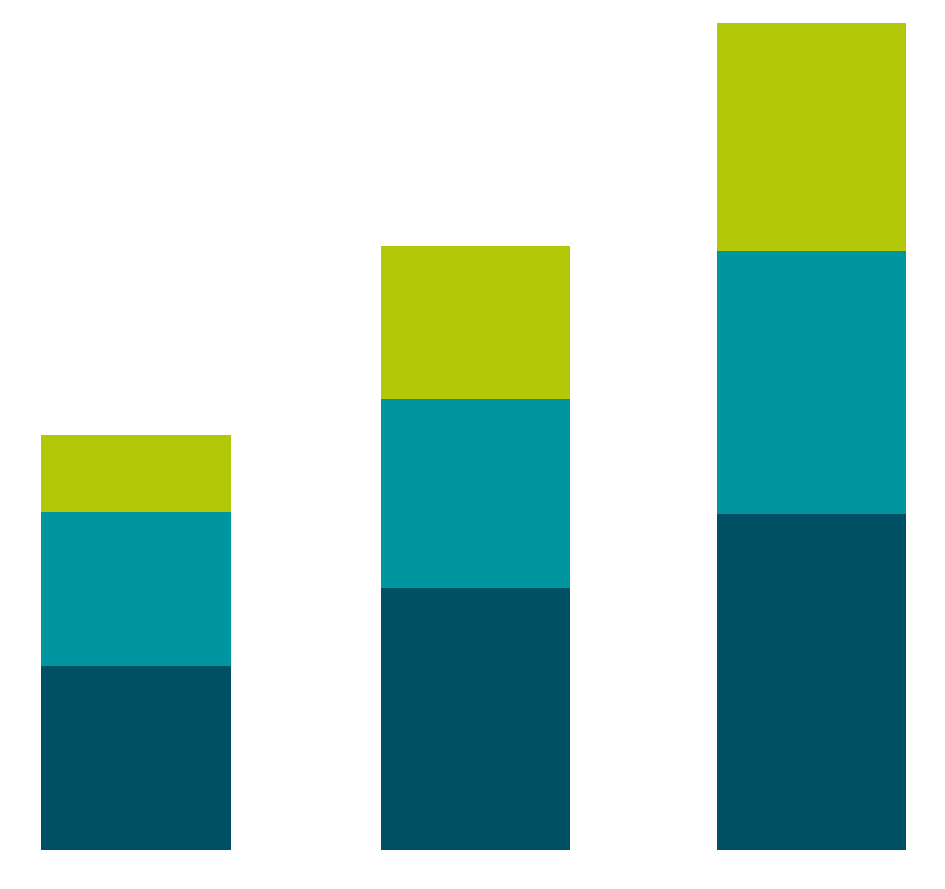
About the PI Impact Points label
A single label. A transparent scale. Every material impact — measured.
A label that shows the full picture
The Impact Points label communicates the net real-world impact performance of a product or service in a single, readable number.
Instead of isolated sustainability claims — “made from recycled materials”, “carbon neutral”, “sustainably sourced” — the label summarises overall impact performance across all material dimensions: climate, water, biodiversity, health, social, and fiscal.
The score reflects performance relative to the PI Reference Path®, the science-based benchmark that translates global sustainability targets into a comparable scale. This means the label does not simply reward doing slightly less harm than average — it measures performance against what the science says is actually needed.
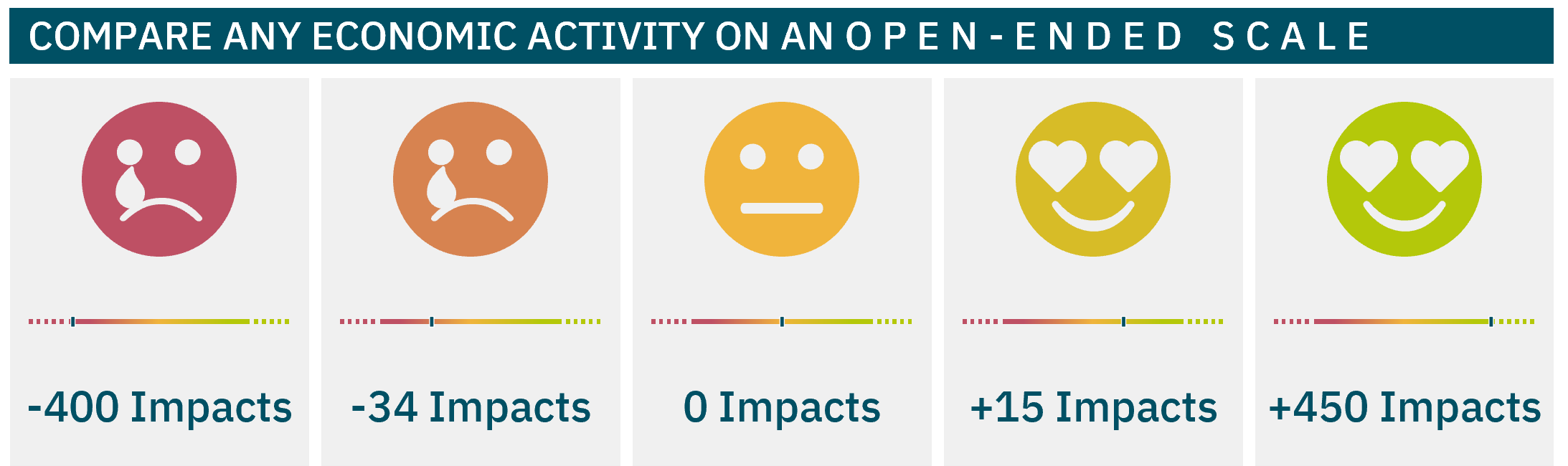
How to read the scale
The scale runs from large negative values through zero to large positive values. There is no fixed upper or lower limit — which reflects the fact that real-world impacts have no fixed ceiling or floor.
Negative scores
A negative Impact Points score indicates that the activity causes net harm relative to the reference path. Impacts are worsening environmental or social conditions beyond what the science-based trajectory allows.
Zero
A score of zero indicates that the activity is precisely aligned with the PI Reference Path® — neither contributing to improvement nor to deterioration relative to the science-based trajectory.
Positive scores
A positive Impact Points score indicates that the activity generates net benefit relative to the reference path — actively contributing to better climate, water, biodiversity, health, social, or fiscal outcomes than the trajectory requires.
Why open-ended?
Conventional sustainability labels use fixed scales — A to F, one to five stars, rankings — because they were designed to communicate relative performance within a fixed range. But real-world quantities such as greenhouse gas emissions, water consumption, or biodiversity loss are not bounded. A label that can only distinguish “good” from “not good” cannot represent the full range of actual impact. Impact Points were designed from the outset to be open-ended, so that extraordinary negative impacts and extraordinary positive contributions are both expressible and comparable.
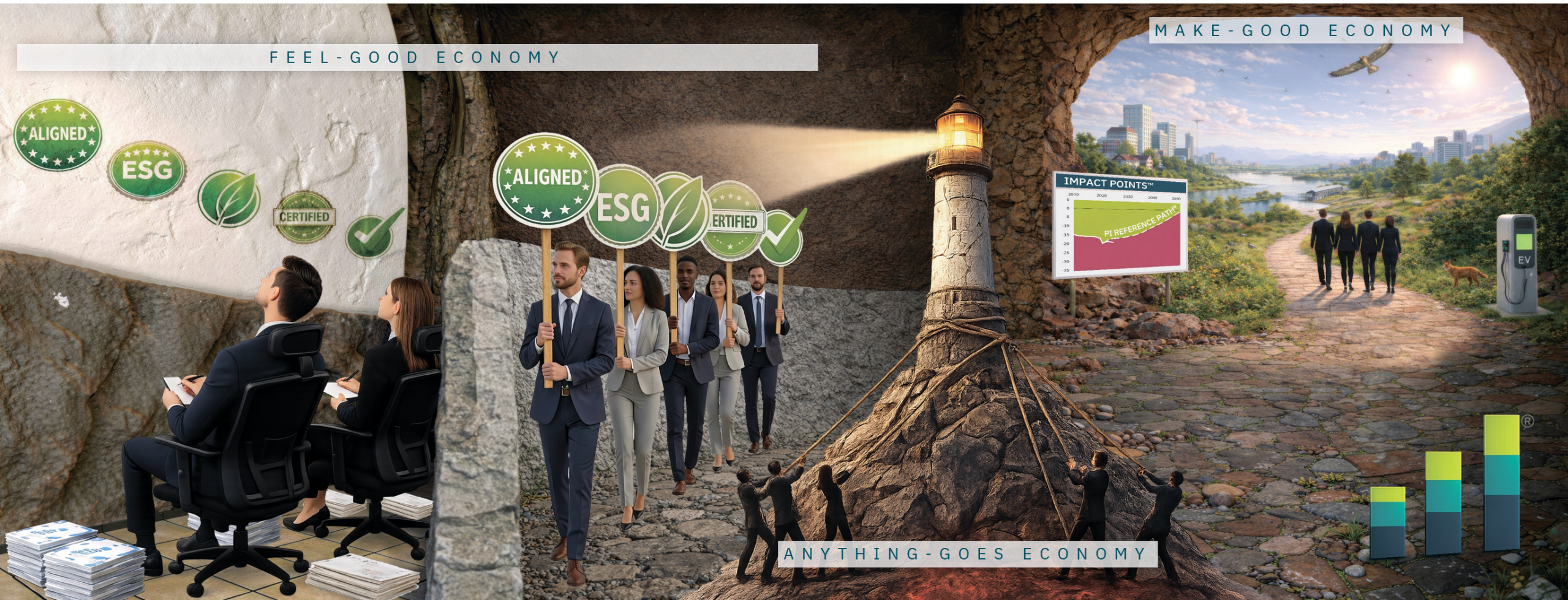
The economy we are building toward
Today’s economy operates under three different logics simultaneously.
The Feel-Good Economy
Sustainability activities that signal virtue but do not necessarily change outcomes. Labels and ratings that reward compliance rather than genuine improvement. Lighthouse projects that demonstrate ambition without shifting the system.
The Anything-Goes Economy
Economic activity that ignores sustainability impacts entirely, or actively resists attempts to measure and account for them.
The Make-Good Economy
Economic activity in which impacts are measured transparently, reported honestly, and used to guide real decisions — by companies, investors, consumers, and policymakers alike. Impact Points are designed to support this transition.
Join our pilot projects
We are currently working with a first group of companies and investors to apply Impact Points to real products, services, and portfolios. Pilot participants receive a full impact assessment and label report, contribute to refining the methodology in practice, and are among the first to communicate their performance using the Impact Points label.
If your organisation is interested in participating, we would be glad to hear from you.